
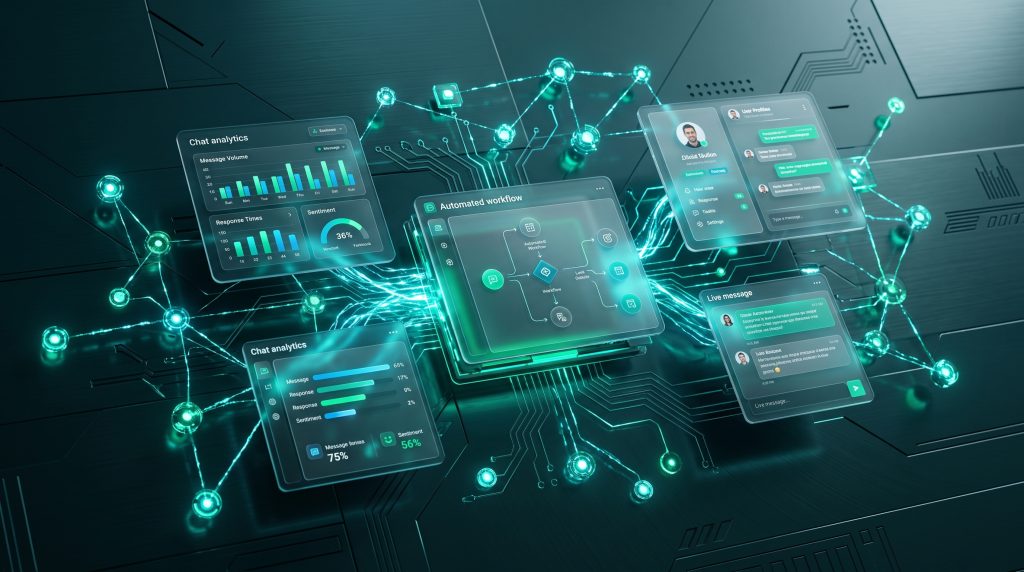
The real estate and urban development sector is witnessing a radical transformation thanks to the adoption of generative AI in customer service and property lifecycle management. Automation is no longer a luxury option to improve response speed, but rather a vital core for operating sales platforms and buyer services around the clock. However, this massive expansion in connecting customer databases and real estate ledgers via application programming interfaces opens wide the door to cybersecurity risks. Any vulnerability in the automation ecosystem could lead to leaks of sensitive financial information, verified sales contracts, or buyer identities, making the security of these systems an undeniable existential necessity for real estate developers.
The Evolution of Generative AI in Real Estate
Real estate developers today rely on large language models capable of answering complex inquiries from investors and buyers about project details, engineering blueprints, and payment schedules. Tools like ChatGPT and Microsoft Copilot allow processing thousands of chats daily with extreme precision and deep understanding of client needs. This integration of AI into company platforms reduces operational costs by up to forty percent and doubles the speed of closing initial deals. Yet, this intense digital interconnectivity means algorithms handle massive repositories of personal and financial data, making them an attractive target for advanced cyberattacks and social engineering breaches.
Hidden Security Challenges Behind Rapid Automation
When we talk about connecting Customer Relationship Management (CRM) platforms with automation tools like Make or n8n, we create complex digital pipelines transferring data between the cloud and internal databases in fractions of a second. The major security problem lies in unprotected endpoints and weak two-factor authentication between disparate services. Cybersecurity reports for 2026 showed that seventy percent of breaches in real estate development companies started via vulnerabilities in third-party software integrations. Attackers do not target smart models directly; instead, they exploit automated data flows to steal API keys and infiltrate main servers.
Best Practices and Tools for Securing Smart Real Estate Architecture
To protect the automation infrastructure in the real estate sector, a multi-layered security strategy must be adopted to ensure complete encryption of data in transit and at rest. This requires periodic auditing of all automation pathways and implementing strict access policies. Recommended tools and platforms to enhance security include:
- Implementing Microsoft Purview to automatically manage and protect sensitive customer data.
- Using Zapier Enterprise to ensure compliance with global security standards and data privacy.
- Adopting automated cybersecurity scanning tools like Burp Suite for API vulnerability testing.
- Enabling biometric and single sign-on (SSO) authentication for all employees and users managing automation systems.
Case Study: How Murooj Real Estate Overcame Security Vulnerabilities
In early 2026, Murooj Real Estate, one of the region’s top development companies, faced a major security challenge after expanding its automated customer service scope via AI. A faulty integration between the chatbot platform and the customer database caused a potential booking data leak. The company responded swiftly by re-engineering workflows using Power Automate while integrating end-to-end encryption protocols. This action not only closed the vulnerability but also helped the company successfully pass security compliance audits, increasing international investor trust and maintaining its market reputation without decline.
The future of the real estate sector depends on the ability to balance accelerated AI innovation with rigorous cybersecurity standards. Do not sacrifice security for operational speed. Contact us today for a specialized technical consultation to help you build an intelligent, efficient, and fully secure real estate automation architecture against future breaches.